
The Mistake Everyone Makes First
The first cold snap of the season rolls through Howey-in-the-Hills, the door looks like it's glued to the driveway, and the instinct is to mash the wall button two or three times in a row, or yank the emergency release cord and muscle the door up by hand. It's tempting because it feels like the door is just being stubborn and a little extra force should break it loose. But a door that's stuck isn't being lazy — something is physically holding it, and forcing the opener motor against that resistance is how you strip a trolley gear, bend a track, or snap a cable that was already under strain. If the door won't move smoothly on the first try, stop and look for why before you try again.
What You'll Notice First
In this part of Florida, a truly frozen door is rare, but a sluggish one after a cool, damp night is common. The symptoms usually show up as one or more of the following:
- The door seems stuck flat to the floor along the bottom edge, especially right after a chilly, dewy morning
- The opener strains, groans, or stalls partway up, then reverses on its own
- The door opens unevenly, with one side lagging or the panel racking slightly in the track
- You hear a dragging or grinding sound from the rollers that wasn't there a few weeks ago
- The remote works, but the door barely budges, almost like the spring has lost its usual snap
None of these mean the door is broken beyond repair. They're clues pointing to a handful of causes, and a technician works through them in a specific order because each one is faster and cheaper to rule out than the next.
What a Technician Checks, in Order
1. The Bottom Seal Stuck to the Slab
This is the first thing checked because it's the most common and the easiest fix. The rubber weather seal (astragal) along the bottom panel can bond lightly to a damp concrete slab overnight, especially if pollen, algae film, or sap residue from nearby trees has built up on the seal. Add a cool, humid Florida night and you get just enough adhesion to make the door feel anchored. The fix is simple: gently pry the seal free along its length rather than lifting the whole door at once, then clean both the seal and the slab strip it touches. If the seal is cracked, flattened, or torn, it gets replaced — a cheap part that prevents the same sticking next time.
2. Rusted or Gritty Tracks and Rollers
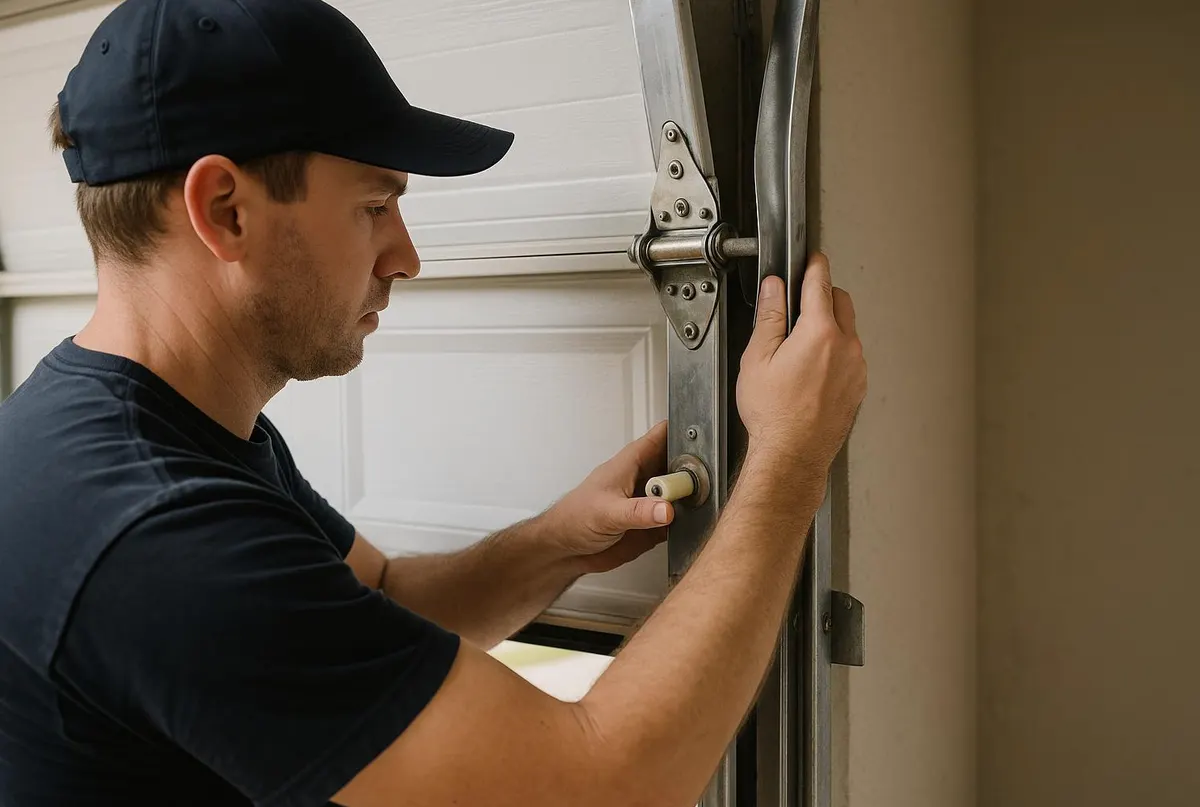
Next comes the track. Lake County's humidity and the afternoon downpours that are routine most of the year leave moisture sitting in the tracks longer than drier climates would. That moisture, combined with road dust and pollen, turns into a gritty paste that stiffens roller movement, and bare steel rollers or track sections can develop surface rust. A technician runs a hand along the track checking for pitting, flaking, or a rough, sticky feel instead of smooth metal. The fix is cleaning the track with a dry rag (never grease, which just collects more grit), followed by a light, garage-door-rated lubricant on the rollers and hinges — not on the track itself.
3. Spring Tension and Corrosion
If the door is heavy to lift by hand even after the seal and track check out, the spring is next. Torsion springs don't freeze in Florida, but they do lose a bit of lift over time as coils rust from repeated humidity swings, and that rust adds friction between coils that a brand-new spring wouldn't have. A technician checks balance by disconnecting the opener and lifting the door manually — if it doesn't hold steady about halfway up, the spring is under-delivering. Depending on the rust and wear, this means a cleaning and relube, or a full spring swap. This is also the point where a tech is careful to inspect, not test, since torsion springs hold dangerous stored force.
4. Opener Settings and Sensor Alignment
A door that stalls or reverses can simply be an opener whose force and limit settings were already borderline, with the added resistance from a stiff roller or seal pushing it over the edge. The check here is quick: look at the safety sensors near the floor for a shifted alignment (even a light bump from a bike or a cooler can nudge them), and confirm the door's travel limits still match where the door actually sits when closed.
5. Swollen or Warped Panels
Last on the list because it's the least common but most involved to fix. Steel doors with foam-insulated cores and wood-composite panels can absorb a surprising amount of moisture over a hurricane season, and that moisture causes slight swelling along panel seams or at the bottom panel where water collects. A swollen panel binds against the track even when everything else is in good shape. If that's the culprit, the fix is a panel replacement rather than an adjustment, since swelling of this kind doesn't reverse once the material has taken on water.
When to Call Howey-in-the-Hills Garage Door Service
If you've freed the seal, wiped down the track, and the door is still heavy, uneven, or noisy, it's time to call rather than keep testing it. A sluggish spring or a panel that's starting to swell only gets more expensive the longer it's pushed through its daily cycles. Howey-in-the-Hills Garage Door Service handles this with Off Track Door Repair when a panel has started to rack in the track, and Preventive Maintenance visits that catch rust and seal wear before a cool morning turns into a stuck door. We'll check the balance, the track alignment, and the hardware condition, and tell you plainly whether you need a five-minute fix or a part replaced.
If your garage door is sticking, straining, or sounding rougher than it used to, call Howey-in-the-Hills Garage Door Service today and we'll get it moving the way it should, whatever Lake County weather does next.